

 BACK
BACK
Articles
in Vol. 26 - May Issue - Year 2025
Faster Turnarounds, Superior Results – Why Wet Blasting Is the Future of MRO

Ryan Ashworth Head of Sales and Marketing of Vapormatt
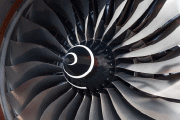
Fan blades
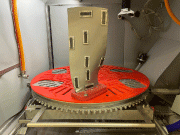
An aerospace fan blade with Almen strips attached, about to be test-peened in a Vapormatt Cougar+ Vertical automatic wet-blasting machine
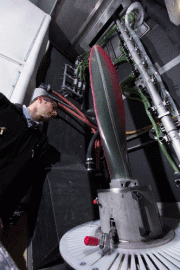
A propeller blade about to be processed in a Vapormatt Leopard automatic wet-blasting machine
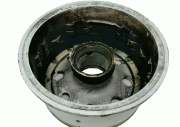
Aircraft wheel before wet-blasting
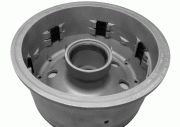
Aircraft wheel after wet-blasting
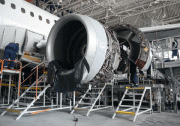
Aircraft engine undergoing maintenance
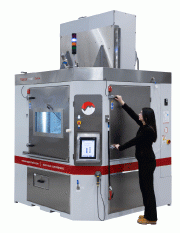
Vapormatt Sabre automatic wet-blasting machine
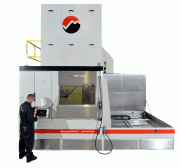
Vapormatt Leopard horizontal automatic wet-blasting machine

Inspection of aircraft undercarriage
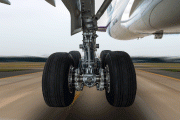
Aircraft wheels
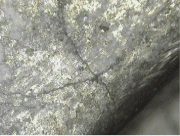
Crack in an aerospace component before wet blasting
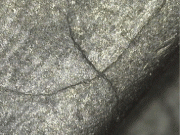
Crack in an aerospace component after wet blasting
About Vapormatt Vapormatt is the original innovator and global leader in wet blasting technology, providing innovative surface preparation solutions across a range of industries, including aerospace, medical, tooling, and wire manufacturing. With a strong commitment to research and development, Vapormatt continues to set new standards in efficiency, sustainability, and performance.
In the fast-paced world of aerospace Maintenance, Repair, and Overhaul (MRO), efficiency, safety, and precision are paramount. Wet blasting, also known as vapor blasting or aqua blasting, is an innovative technology offering a cleaner, safer, and more effective alternative to traditional dry blasting methods. With the aerospace industry continuously evolving, adopting state-of-the-art surface preparation technologies like wet blasting is crucial for staying ahead.
The Science Behind Wet Blasting
Unlike dry blasting, which relies solely on abrasive media propelled by compressed air, wet blasting combines water with abrasive media to create a slurry that cleans, polishes, and prepares surfaces. This water-based process eliminates airborne dust and provides superior surface conditioning without the risk of media embedment or material degradation. The result is a cleaner, smoother surface that is better suited for subsequent inspections, coatings, or repairs.
Extending the Life of Turbine and Fan Blades with Wet Shot Peening
One of the most significant applications of wet blasting in aerospace MRO is wet shot peening, a process that can extend the lifespan of turbine blades by over 1000%. By bombarding turbine and fan blades with small, hard spherical media particles, the process introduces beneficial compressive stresses, improving fatigue strength and significantly reducing the risk of fractures and cracks.
Why Wet Shot Peening Is Superior to Dry Shot Peening
- Superior finishes – The flow of media ensures a smoother, more consistent, and higher-quality finish.
- Contamination-free processing – Wet shot peening works best with ceramic or stainless-steel shot blast media, with the benefit that any risks of non-ferrous contamination are removed from the process.
- Enhanced process control – The process allows for higher levels of process control, with multiple adjustable variables delivering the best possible results.
- Lower media consumption – Thanks to the use of water and Vapormatt’s patented filtration systems, good media and water are recycled, significantly reducing spend on consumables.
- Dust-free operation – There is no need to clean residual dust and media from components after peening because it’s contained in the water and flows through and off intricate shapes.
- Elimination of pre-cleaning – Components can be placed in wet blast machines covered in dirt, oil, grease, and other contaminants. Components are then cleaned simultaneously with the wet peening process.
- Enhanced health and safety – The risk of explosion associated with dry blasting materials like titanium is eliminated thanks to the containment of dust in water. This removes the need for expensive ATEX filtration systems. The absence of dust also eliminates issues associated with dust inhalation.
By integrating wet shot peening into their MRO processes, aerospace companies can significantly reduce maintenance costs, improve reliability, and extend the operational life of critical engine components.
Jet Engine Cleaning, De-Coating, and Surface Preparation
Jet engines operate under extreme conditions and require meticulous maintenance to ensure peak performance and safety. Wet blasting plays a crucial role in jet engine MRO by:
- Thoroughly cleaning components for Non-Destructive Testing (NDT), enhancing crack visibility.
- De-coating and de-painting without damaging sensitive engine components.
- Precisely preparing surfaces for coatings, ensuring superior adhesion and longevity.
Applicable Jet Engine Components
- Fan blades, including titanium-forged blades
- Turbine vanes and high-pressure turbine (HPT) shrouds
- Engine seals and labyrinth seals
- Blisks and integrally bladed rotors (IBRs)
- Driveshafts and exhaust components
- Heat exchangers and compressor housings
By implementing wet blasting, aerospace MRO facilities can enhance the accuracy and efficiency of their engine maintenance programs while ensuring compliance with stringent industry standards.
Cleaning and Stripping Wheels and Brakes for Inspection
Aircraft wheel and braking systems endure extreme stresses, requiring rigorous cleaning and inspection. Wet blasting simplifies and improves the maintenance process by:
- Removing multiple coating layers, oils, and contaminants in a single step
- Enhancing the accuracy of eddy current testing (ECT) for crack detection
- Containing hazardous brake dust and chromium particles, safeguarding worker health
- Eliminating the need for manual scrubbing, harsh chemicals, and multiple cleaning stages
Unlike dry blasting, which risks peening over cracks, wet blasting cleans out cracks, making them more visible during inspection, improving safety and efficiency.
Composite and Additive Manufactured (AM) Components
With the rise of composites and additive manufacturing in aerospace, maintenance processes must adapt. Wet blasting is ideal for these advanced materials, offering benefits like:
- Gentle, controlled removal of coatings and contaminants without damaging composite fibres
- Ideal surface preparation for adhesives and coatings like paint, thanks to the uniform creation of ‘wet-out’ surfaces for optimum coating and adhesive distribution over component surfaces, which in turn leads to the best possible bond strength
- Effective internal channel cleaning in complex AM components, ensuring optimal functionality
As composite materials and AM parts become more prevalent in aerospace, wet blasting offers a future-proof solution for their maintenance and repair.
Propellers and Helicopter Blades
When it comes to propeller and helicopter blades, wet blasting is used to remove paint, corrosion, and contaminants while preparing surfaces for NDT and recoating. It is ideal for aluminium, titanium, and composite materials, ensuring precise, damage-free cleaning.
- Gentle cleaning and de-coating – The process cleans and de-coats without causing micro-cracks or damaging delicate aerospace components.
- Safe NDT preparation by removing contaminants while preserving critical surface integrity
- Optimal repainting and bonding preparation, ensuring maximum adhesion for de-icing pads, leading edges, and protective coatings
Wet blasting ensures propeller and helicopter blades maintain performance, durability, and compliance with aviation standards while providing a safer and more effective MRO solution.
Automation, Process Control, and Environmental Benefits
Automation is at the core of modern aerospace MRO. Wet blasting machines offer:
- Automated precision – Ensuring consistent results and rapid return on investment
- Adjustable parameters – Allowing fine-tuned control over pressure, water flow, and blast media
- Lower environmental impact – Eliminating the need for harsh chemicals and significantly reducing waste
- Safer working conditions – Suppressing dust, reducing noise levels, and eliminating harmful airborne particles
Controlling what comes out of the blast guns is essential for high-quality, consistent results. That applies to all applications, from cleaning and wet shot peening to surface preparation.
It is particularly important for automatic processes where the operator is not always there to visually check the consistency of blast flow and the results.
The blast flow must always remain consistent, and thanks to world-leading technical expertise and patented technology, Vapormatt are second to none when it comes to controlling the consistency of output from blast guns. Their technology can deliver consistent flow year in, year out without change, even when components start to wear in the normal course of operation.
The Future of MRO – Why Aerospace Leaders Are Adopting Wet Blasting
With its unparalleled advantages, wet blasting is quickly becoming the preferred method for aerospace MRO operations. Major airlines, military maintenance programs, and OEMs are investing in wet blasting technology to achieve:
- Reduced turnaround times for MRO procedures
- Lower maintenance costs through extended component life
- Enhanced compliance with regulatory and safety standards
- More sustainable operations by reducing chemical and abrasive waste
As the aerospace industry continues to push for innovation, wet blasting is setting a new standard in maintenance and repair. To explore how wet blasting can revolutionise your MRO operations, visit the vapormatt website for detailed case studies, technical specifications, and automation options.
Ryan Ashworth
Head of Sales and Marketing of Vapormatt
For Information:
Vapormatt
Robins Drive, Bridgwater, TA6 4DL, England
Tel. +44.1823.257976
E-mail: sales@vapormatt.com